
Creative work & culture
A farm, a ferry and caregivers: creative professionals use AI to tell community stories.
Three creative professionals used AI for community campaigns. Their work puts human judgment, local knowledge and craft at the center.
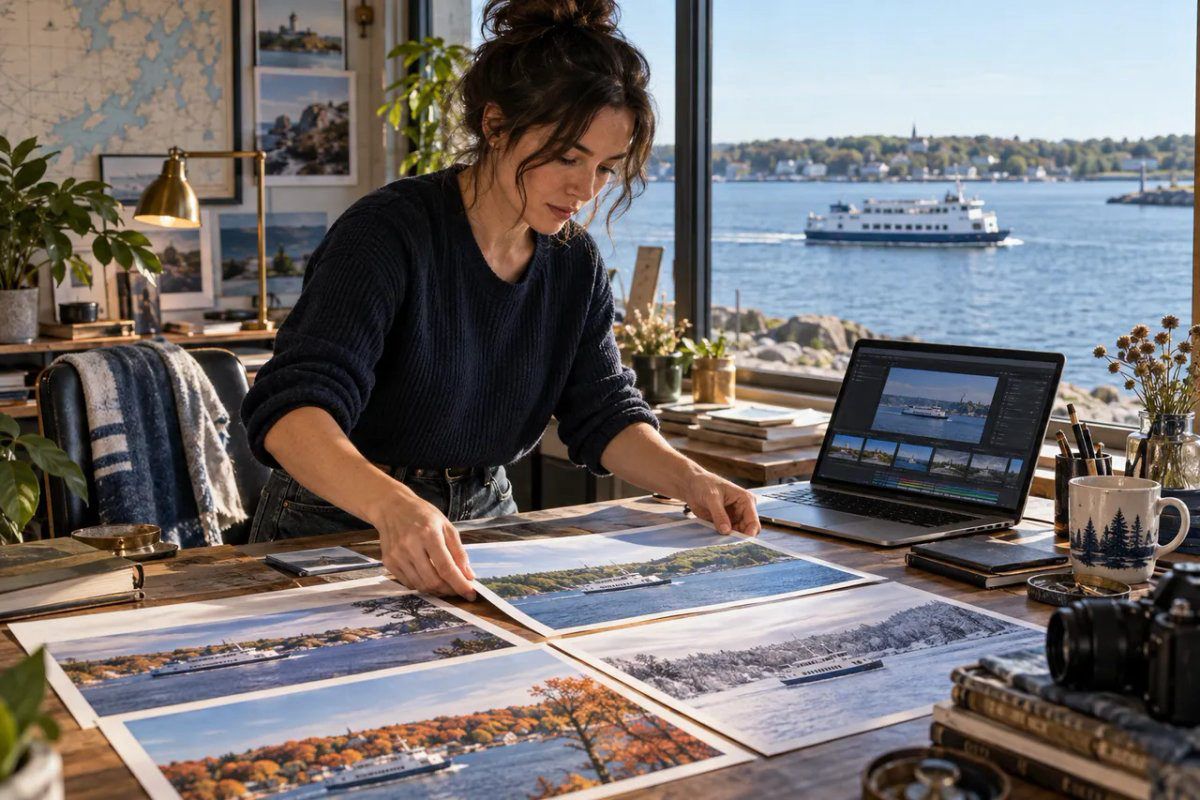
Some organizations have a story worth telling long before they have a production budget. Creative AI gives them tools for developing a script, organizing material and working through visual ideas. Turning those pieces into a finished story still takes people who know the subject.
The need: help an organization tell its own story well
A community organization does not need a full production team to have people, history and ideas worth sharing. A local business faces a similar challenge when it needs a clear website, a useful explanation or a piece that communicates why its work matters.
Creative assistance would be valuable across the process: finding a structure, organizing source material, exploring visual ideas and preparing accessible versions. The people closest to the subject still need to decide what is true, what belongs in the story and how they want to represent themselves.
That makes creative AI an opportunity for practical learning as much as content generation. A useful tool should help someone develop judgment and craft, while making it easier to take an idea through to a finished, reviewable piece.
Three projects, three human perspectives
In August 2026, Google shared a commissioned project involving Susan Credle, Tiffany Rolfe and Jayanta Jenkins. Credle created a campaign for Stonewood Farm in New York's Hudson River Valley. Rolfe worked on a historical film for Long Island's South Ferry. Jenkins developed a caregiver-focused film for ARCHANGELS. Google provided the professionals with unlimited access to Flow. This was a supplier-backed showcase featuring experienced creatives, not a test of typical beginner results or business returns. Read Google's account, August 19, 2026.
The public need is access to both the tools and the education to tell a community's story well.
Follow the story from research to publication
A local-history project would start with records, interviews and images the team has permission to use. Assistance would help organize a timeline and draft a script. Editors would verify claims and make clear where a scene is a reconstruction rather than a record of an actual event.
A small organization preparing an explanation of its services would supply the facts and intended audience. A tool would propose different structures, help simplify language and prepare a web version. Staff would check every practical detail and test whether the audience understands the message.
A creator developing a visual idea would compare sketches and references, explain the intended effect and revise the concept. Future image-generation tools would support additional iterations; final use would depend on permissions, quality and honest presentation. Voice work would likewise require consent and a clear distinction between an authorized performance and an impersonation.
Budget for the human work
A finished piece still needs editing, fact checking, accessibility review and someone responsible for corrections. Good instruction would make those stages visible rather than suggest that production ends when the generator returns an output.
Organizations would also need control over source files and usable exports. The team should be able to revise the work later, change its tools and retain the material it has rights to use. Those practical choices help preserve authorship and continuity.
Count more than the number of images
A creative-production pilot should measure whether a small organization can finish an accessible, accurate piece within its budget. Review would cover permissions, quality, audience understanding and the human time involved. Public funding should pay for creative expertise and education, not assume that a generator makes either unnecessary.
American Super Intelligence does not claim these campaigns, their creators or their subjects as partners. Their work illustrates the tasks a public creative program would support: developing ideas, preparing material and communicating with an audience.
How Liberty will give more creators tools and education
LibertyGPT will provide a starting point for research organization, scripts, planning and accessible writing. Coding capabilities will help developers build websites and production tools. Liberty OSS will let American creators and software teams adapt models to specialized workflows and appropriate private environments.
Future image-generation and voice models will extend those options after their own development and evaluation. The public roadmap keeps these capabilities distinct from the initial assistant and smaller model releases, so people can see what is proposed and what will require further work.
the program’s education program will connect the tools with editorial and technical skills. Liberty will help by making useful foundations and instruction available together, giving more organizations a route from a story they understand to work they can publish with care and continue to control.
Explore media and creative work and future model capabilities.