
Veterans & careers
Stephen Hudson is using AI to help veterans explain what they can do.
A Navy veteran’s career-coaching initiative shows why access works best when it is shaped around a real transition.
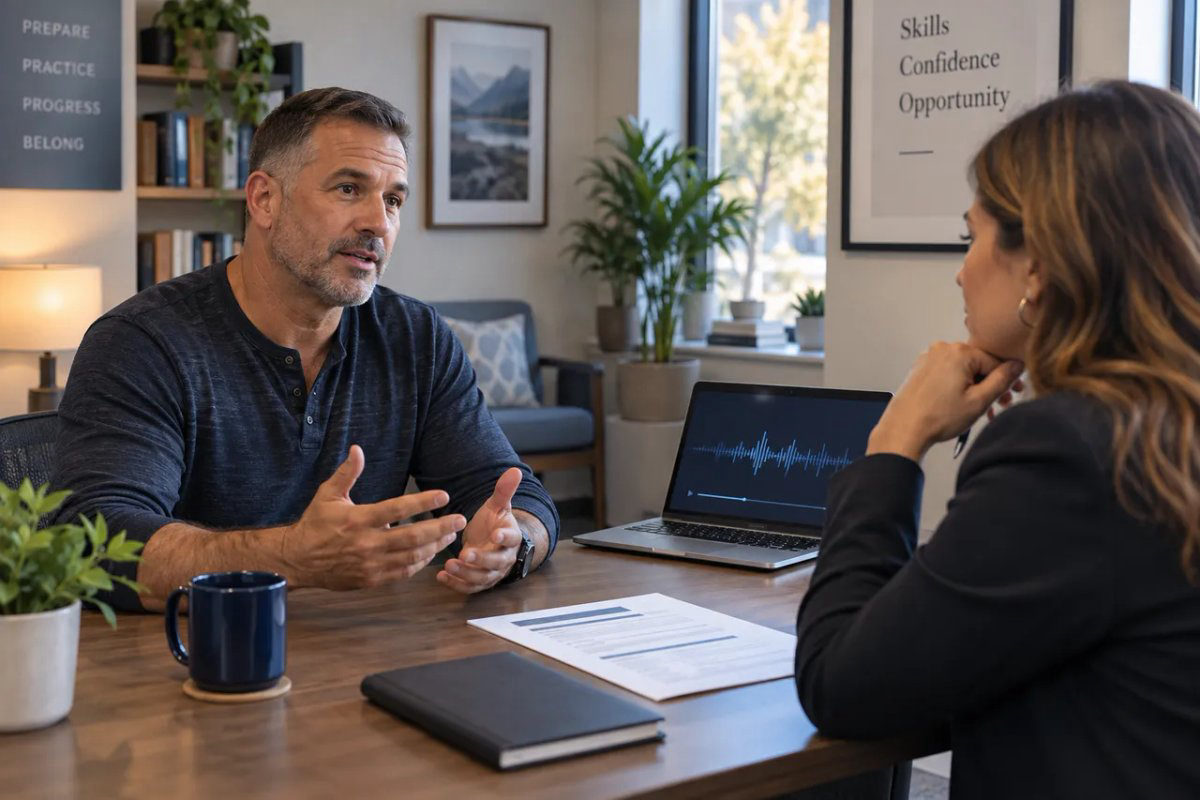
Military experience can be extensive and still be difficult to explain in a civilian job application. Translating that experience is a task where a knowledgeable coach can make a difference.
The need: make experience understandable in a new setting
A career transition asks a person to explain what they know in language that a new employer can understand. Job titles, responsibilities and working conditions may not map neatly between organizations or sectors.
For a veteran, practical preparation includes describing a technical task, explaining leadership experience or practicing an unfamiliar interview format. The goal is an accurate account of real skills and evidence—not a more elaborate claim than the person can support.
A useful service would also recognize that transitions take time. Someone may need a short practice session today, a conversation with an adviser next week and a career learning pathway that develops over several months. The assistance should connect those steps without presenting any one of them as a guarantee of employment.
A veteran builds a coaching resource
A January 5, 2026 OpenAI Academy profile describes Stephen K. Hudson, a retired Navy veteran and educator, developing AI Ready Veteran. Its tools help users translate military experience into civilian competencies, prepare applications and practice interviews. The profile reports more than 1,000 users. That is a supplier-published account of participation, not verified evidence of job placements, higher wages or long-term retention. Read Hudson's story.
Career support needs to be available when the person is ready to practice. An interview may be tomorrow; a local workshop may not be available until next month.
Connect practice to evidence of what the person can do
An experience-mapping exercise would begin with the veteran’s own description of their work. Assistance would suggest plain-language wording, then ask the person to check whether it accurately represents their responsibilities. The final account would preserve the distinction between leading a task, contributing to it and observing it.
For interview practice, a learner would choose a role and rehearse answering a question with a specific example. Feedback would focus on clarity and relevance. A human adviser would help interpret the employer’s requirements and identify where further evidence or preparation is needed.
For a technical-learning exercise, a person would begin with an introductory software project or a supervised systems lab. They would create a small piece of work, test it and explain the result. A portfolio would record the process and limitations as well as the finished output.
Make the route between services understandable
Career assistance often involves more than one organization. A useful application would help a person prepare for a conversation and locate current public information, with source links they can check. Eligibility decisions and individualized professional advice would remain with the responsible service.
AI literacy education should explain what information belongs in a public tool. Military service does not make operational details appropriate to share, and career support does not require disclosure of sensitive mission information. People would need suitable ways to describe their skills without exposing protected material.
Measure readiness and follow career outcomes
A pilot should separate confidence from outcomes. It should assess the accuracy of skills descriptions, interview readiness, accessibility and adviser workload, then follow employment and retention with participants' consent. Generated applications must reflect actual experience; a more polished false claim does not help a veteran.
The proposed benefit is continuity of support through a difficult change. American Super Intelligence is not an announced partner of Hudson or AI Ready Veteran, and an assistant cannot promise employment or decide eligibility for benefits.
How Liberty will provide continuity through a career change
LibertyGPT will offer a place to practice, learn terminology and organize a person’s own experience. It will complement qualified career advisers and veteran-serving organizations with support available between appointments and courses.
Liberty OSS will let those organizations adapt models and learning materials around the people they serve. the program’s education pathway will connect everyday AI skills to software development, model work and infrastructure operations education where appropriate prerequisites and instruction are available.
These public services will remain separate from Liberty Sentinel’s protected national-security environments. The purpose here is civilian access and learning. Liberty will help by connecting tools, adaptable applications and practical education across the transition, while the veteran’s actual skills, informed choices and demonstrated work remain central.
Explore veterans and military families and workforce learning.