
Schools & teaching
Alpha School puts personalized learning at the center of the school day.
Alpha School combines adaptive academic practice with projects and adult guidance. Family experiences show what educators need to examine.
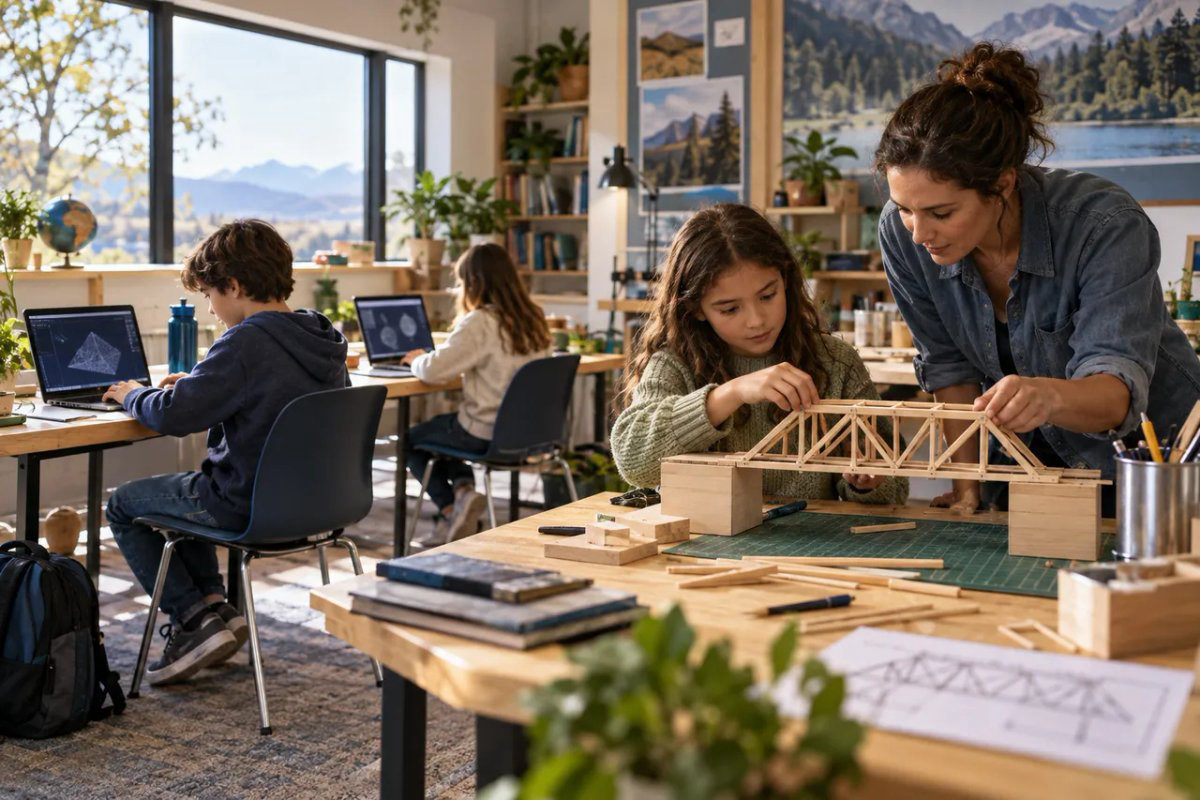
Alpha School organizes the day around adaptive academic practice, projects and adult guidance. Its approach brings a central education question into focus: how do we give each student the help they need while preserving the relationships and experiences that make school valuable?
The need: help that meets the learner where they are
A classroom brings together students who understand different parts of a subject. One child needs more practice with an earlier idea; another is ready for a harder question. A learning system needs to help teachers recognize those differences and provide meaningful work for both.
Personalization needs a clear educational purpose. Adjusting the difficulty of a worksheet is one step. Helping a learner explain a mistake, connect an idea to something familiar and later solve a problem independently is a more demanding goal. The teacher needs to see what the student understood, not just whether an answer was accepted.
The need extends beyond any one school’s schedule. Families and educators need adaptable assistance that keeps them in control of teaching, relationships and a child’s development.
What Alpha School is doing
Alpha describes a full school day built around roughly two hours of core academic work with adaptive learning software, followed by activities focused on life skills and projects. Adult guides support students. The two-hour claim refers to the academic block, not the entire school day. Alpha also advertises accelerated learning and strong test performance; those are the school's claims. Alpha's program FAQ
In January 2026, co-founder MacKenzie Price published selected parent survey responses describing children becoming more enthusiastic about school and more independent. They help explain the appeal, but selected testimonials do not establish typical outcomes or show what caused improvement. Alpha's parent-feedback account, January 20, 2026
The picture is mixed. In October 2025, WIRED interviewed Brownsville parents including Kristine Barrios and Jessica Lopez who reported educational gaps and difficult experiences. Alpha disputed the reporting and denied allegations that it had harmed students. Those accounts deserve attention alongside the school's testimonials. WIRED's reporting and Alpha's response
Put personalized support to work in the classroom
Consider an elementary mathematics lesson. A teacher would choose the concept and review a set of examples. A student who is struggling would receive a simpler representation or a hint; a student who is ready to move on would explain why a method works in a different situation. Both would return to a common discussion, and the teacher would assess what each can do without assistance.
In a reading exercise, students would identify the sentence that supports an interpretation. An assistant would ask a follow-up question rather than supply a complete response to copy. In a science project, students would use it to organize their questions, then gather observations and compare them with their predictions.
Teachers would also use assistance before class: adapt an exercise, prepare examples of common mistakes or explain an assignment in language families can understand. Those uses let a school begin with a specific need instead of redesigning the entire school day around a product.
Keep relationships and independence in the design
Students still need conversation, physical activity, collaboration and opportunities to struggle productively. AI practice would fit within that wider experience. Teachers and families would set appropriate boundaries and watch for a learner who appears successful on screen but cannot explain the work afterward.
A school would also need time for staff preparation and a way to respond when the system gives a confusing or incorrect explanation. Those are part of the learning service, alongside the software.
Measure learning, independence and wellbeing
A public pilot should publish its evaluation approach before claiming success. It should examine learning retained over time, transfer to unfamiliar problems, student wellbeing, accessibility and the experiences of students who leave. Independent assessment and a meaningful comparison group would help distinguish software effects from staffing, selection and other differences.
The goal is more opportunity for each learner. Public investment needs evidence of what students learn, where support falls short and how schools respond.
Alpha School is separate from AlphaBravo and American Super Intelligence. No partnership or endorsement is implied.
How Liberty will give schools more control over personalized learning
LibertyGPT will provide a public starting point for guided practice and teacher preparation. Liberty OSS will give qualified education teams models they can examine and adapt to curriculum, accessibility needs and approved teaching materials. Schools can evaluate a particular use without adopting one private school’s instructional model.
Education will be central to that offering. Lessons will teach educators to review activities and interpret results, and give students practice in questioning answers and explaining their reasoning. Smaller Liberty OSS variants will also create options for school-managed applications where the hardware and evaluation support them.
The public value will come from combining access with local educational judgment. More schools will have a foundation to build upon, while evidence from learners and educators will determine which approaches deserve to grow.
Explore education for every level and elementary-school uses.